
Searching the Wisner Court Docket
No official Wisner docket page lets you type in a name, case number, or citation number. You cannot pull up a court date that way. So start with the paper filing. A Fifth Judicial District Court case belongs with the Franklin Parish Clerk of Court, and a copy or hearing request goes through that office. A town ordinance matter, though, may sit in a Wisner mayor's court if one is operating. Small civil claims, evictions, and peace bonds can also land in a Justice of the Peace district. Each venue keeps its own files with its own custodian.
- Read the citation, summons, notice, or order for the exact court name, venue, case or citation number, date, and type of matter.
- For a Fifth Judicial District case, call the Franklin Parish Clerk at 318-435-5133 or ask about the public court-proceeding register at 6550 Main Street in Winnsboro.
- For a municipal ordinance paper, contact the town or mayor's court custodian named by the document. Current Wisner court contact details were not located in the official source set.
- For a Justice of the Peace matter, use the official state directory to identify the Franklin Parish district, jurisdiction, and phone before asking for its local docket method.
- Ask whether the requested item is a docket entry, minute, order, disposition, or certified copy. Give the year and venue so the office can check the right file.
That makes a Wisner docket search a matter of matching venue and custodian, not a quick web lookup. Have the full caption in front of you. Gather the issuing officer or agency, the violation or filing date, the court date, and the document type before calling anyone. A paper naming the Fifth Judicial District belongs on the county-level case lookup route. It may name a town or J.P. venue instead. Confirm the Franklin Clerk actually holds the record before sending a request there.
Wisner Docket Portal Gap
Wisner offers no court search page. There is no public citation lookup, no municipal payment portal, no judge listing, and no town-specific calendar. The Wisner municipal profile is the one official stop. It identifies City Hall at 9530 Natchez Street along with a second-Thursday council meeting schedule. It does not expose any docket search controls. A town page is not proof that a public Wisner docket database exists.
Work from the name and venue printed on the record instead. A phone call, a counter visit, or a written request will get you further than a web search. For a Fifth Judicial District file, start with the clerk. The clerk can tell you whether an electronic record, an older bound file, minutes, or copies are available. For a municipal or J.P. record, ask the local custodian directly. That office runs the inspection and copy process. The state J.P. directory lists officials, not individual cases.

That municipal profile gives town-government context only. It does not replace a citation, docket entry, calendar notice, or confirmation from the court that owns the Wisner record.
Note: Wisner posts no public court portal, so the court named on the document remains the strongest starting point.
Wisner Municipal Court Basics
Wisner's local court status needs careful handling. The town may operate a mayor's court for municipal ordinance matters, but there is no current official court page, magistrate listing, contact, hours, docket, or payment screen to check. A town ordinance ticket could therefore require a direct request to the municipal custodian. The fact to verify is never a guessed office name. It is the court printed on the citation.
Louisiana mayor's courts generally handle municipal ordinances, and state law requires each one to keep a regular docket plus a record of cases tried. The Louisiana mayor's-court statute sets out that jurisdiction structure. The companion docket-record statute covers the regular docket and case record, while the Legislative Auditor's mayor's-court guidance, revised in August 2025, warns that state Highway Regulatory Act traffic violations generally fall outside mayor's-court jurisdiction. That line matters for any Wisner ticket.
A local ordinance docket and a state-law traffic case can look almost identical on paper. Yet they belong in different venues. Ask which rule was charged. Ask the town or the issuing court when the hearing is set and who holds the file. Never assume every Wisner traffic paper belongs to the town or to Fifth Judicial District Court.
Wisner Ordinance Court Terms
A few plain terms help here. They let you tell a Wisner municipal record from a county trial-court file. An ordinance violation breaks a local rule. A mayor's court is a municipal tribunal established and operating under state law. A regular docket is simply the court's schedule of matters, and a perfect record means the court keeps a complete record of every case tried. These terms describe structure. They promise no online search page.
- Municipal ordinance
- A local rule enforced by the municipality and handled in the local venue when that court has authority.
- Mayor's court
- A municipal court structure that may keep ordinance cases; current Wisner operation and contact must be confirmed.
- Regular docket
- The ordinary list of matters set for a court session or day.
- State-law traffic
- A traffic allegation under state law that may require a venue other than a mayor's court.
- Custodian
- The public office with custody or control of the record being requested.
The charge or ordinance printed on the citation tells you more than the town name. If the paper never names the court, ask the issuing agency which office holds the record and where the hearing is set.
Court Dates and Settings in Wisner
Wisner itself posts no city-specific calendar. A Wisner paper may name the Fifth Judicial District Court. That court's public calendar works as a planning aid rather than a case list. Civil matters generally fall on Monday and Thursday. Felony arraignments, motions, and trials generally fall Wednesday at 9:30 a.m. Misdemeanor matters generally fall Tuesday. Protective-order matters generally fall Friday. Jury weeks stay reserved for jury or special bench settings.
| Date | Use the date on the newest citation, notice, or signed order. A general weekday pattern is not confirmation. |
|---|---|
| Time | Confirm the exact call time with the court or clerk named on the Wisner document. |
| Courtroom or location | Ask the named venue. No Wisner municipal setting block or courtroom listing was published. |
| Judge or court | Use the division, judge, mayor's court, or J.P. name shown on the paper, if present. |
| Setting type | Distinguish a civil setting, arraignment, motion, trial, protective-order hearing, or ordinance matter. |
Pin down the venue before anything else. Once you know the court, the Fifth Judicial District calendar is worth a look. Follow up with a call to the Franklin Clerk or the assigned court office, since a date can be continued, reset, passed, canceled, moved to jury week, or replaced by a special setting. An older date can also linger in the chronology after a later notice changes it.
Wisner Fifth JDC Court Calendar
The Fifth Judicial District calendar is the best online tool. It schedules a Wisner case sitting in the parish trial court. It offers no party-name search. No case-number search, date picker, or individual result list either. What it publishes instead are broad categories for the district's regular weeks. That helps you plan a call. It cannot prove a specific Wisner matter will be heard.
For a Wisner civil case, the general pattern puts non-jury weeks on Monday and Thursday. Felony work usually shows up Wednesday at 9:30 a.m. Misdemeanors tend to land on Tuesday, and protective orders generally use Friday. A non-support court day can change the pattern. Jury weeks cover criminal petit-jury trials, civil jury trials, and special bench settings. Holidays, settlements, continuances, and court-specific assignments can all shift these patterns.
Broad patterns never outrank the paperwork. The current file with the Franklin Parish Clerk controls. Give the clerk the case number, division, and latest known date. Then ask which entry is operative. That question keeps a weekly category from being mistaken for a live case docket.
Traffic Tickets in Wisner
Every Wisner traffic ticket has to be matched to the court that issued it. A local ordinance citation may fall to a municipal or mayor's court. That applies if the court is operating. A state-law citation may run through a different court or the district attorney's traffic channel. The 2025 mayor's-court guidance warns against assuming authority here. A mayor's court does not control every state Highway Regulatory Act violation.
The Fifth Judicial District Attorney's official traffic page links to an official district traffic transaction screen. Its fields ask for a citation number and court date. Add the driver's-license number and state, email, fine amount, diversion fee, and an acknowledgment. Partial payments are not accepted. That screen is no universal Wisner docket search. It also does not prove every town citation qualifies for the route.
Let the printed citation control. Use it for the appearance or payment instruction. For a municipal record, ask the town office named on the ticket. For a J.P. matter, identify the district first. For a Fifth District traffic transaction, the Franklin Parish traffic court records route adds broader county traffic context. It never changes the venue printed on the ticket.
Wisner Citation Court Custodian
Treat the ticket itself as a small routing form. Write down the citation number and violation date. Add the court date, issuing officer or agency, ordinance or statute, and exact court name. Add the full caption or party name too. Do this if the matter is civil or uses a case caption. Then ask for the current setting, the disposition, and the copy you need.
The official Louisiana Attorney General Justice of the Peace directory can be filtered by Parish=Franklin. Filter further by district or jurisdiction. Results show the official's name, position, parish, jurisdiction, phone, and warrant-certification status. The directory finds an office. It does not find the Wisner case. Ask the J.P. what local inspection, filing, or copy method that office offers.
Match the paper to the desk. A Fifth Judicial District or Franklin Parish file goes through the Franklin Clerk route. A Wisner municipal venue goes to the town or magistrate. A DA traffic transaction needs a quick check first. Confirm the ticket actually fits the program. That sequence keeps a Wisner citation from landing at the wrong records desk.
Note: A state directory can locate a Justice of the Peace office, but only the citation and that office can identify the correct Wisner case.
Where Wisner Cases Go
Not every Wisner case lands in one town docket. Venue depends on the type of matter. A local ordinance matter starts local. It goes to the Wisner municipal or mayor's court custodian if that court is operating. A limited civil, eviction, or peace-bond matter may belong to a Justice of the Peace district. Major civil, felony, family, juvenile, adoption, and succession matters go to the Franklin Parish Clerk. Fifth Judicial District appeal matters route there too. Appeals from applicable Fifth Judicial District cases go to the Louisiana Second Circuit Court of Appeal. That is the appellate layer for those matters.
Docket flow: Wisner municipal or lower-court custodian › Franklin Parish Clerk / Fifth Judicial District Court › Louisiana Second Circuit Court of Appeal when an applicable district-court appeal proceeds.
The document picks the first stop. A Wisner address alone tells you nothing about the court. The Franklin Parish case lookup route explains how to gather identifiers for a parish trial court case. Use it before a clerk-assisted request. If the venue is lower, use the court named on the citation or notice instead. That one check saves a wasted trip.
Wisner Four-Place Court Map
Wisner ranks second in size among Franklin Parish's four incorporated places. The official Louisiana.gov parish profile names them all: Winnsboro, Wisner, Gilbert, and Baskin. The 2020 Census put Wisner at 771 people. Small towns inside a multi-level parish court system can see their requests scattered across venues. Those numbers explain the scatter. They say nothing about caseload, though, and they do not create a town court portal.
The four-place map guards against a common error. Not every parish town shares one court structure. Winnsboro holds the parish seat and the Franklin Clerk's court campus. Wisner, Gilbert, and Baskin may run municipal ordinance venues if they operate. Justice of the Peace records follow district lines. So a case raised in Wisner can sit outside Wisner whenever law and venue demand it.
The population figure comes from the official Census incorporated-places table.
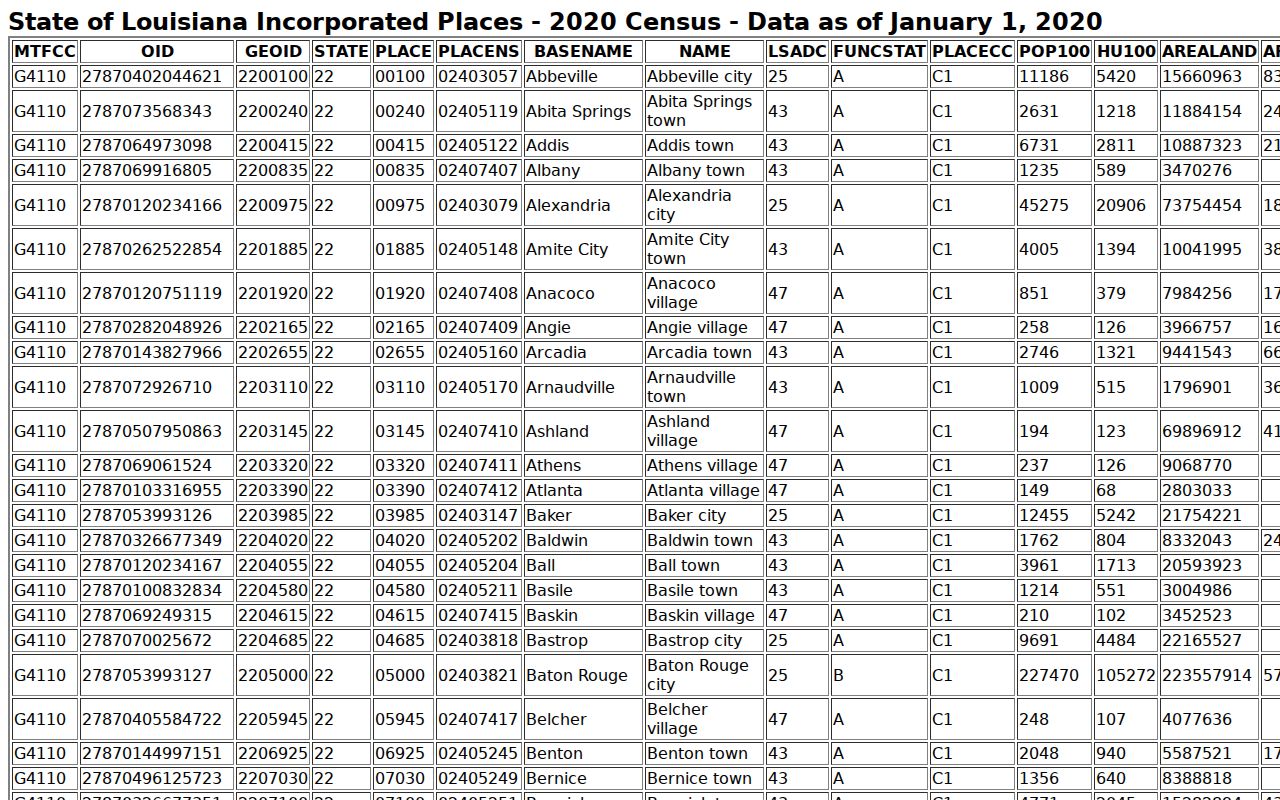
Population rank is what puts Wisner on this court map. That ranking says nothing about filings, court volume, or how many municipal cases the town actually handles.
Wisner Court Record Access Rules
Access starts with whichever office actually holds the Wisner record. Under La. R.S. 44:31, adults may inspect, copy, or reproduce public records unless an exception applies. Louisiana's rules also require the record holder to allow examination during regular hours. The holder must provide copies at applicable fees. Those rights support a request. They do not conjure an online database out of a town with no portal.
Wisner access check.
Ask for inspection, a plain copy, or a certified copy from the municipal, J.P., DA, or Franklin Parish custodian that holds the file.
A civil protective order can limit access to protected material, while the court file may retain a public event showing that an order was entered.
La. C.Cr.P. art. 973 makes an expunged arrest or conviction record confidential, subject to stated exceptions.
Juvenile, sealed, expunged, protected, or sensitive material may be withheld or redacted. Ask for the public portion and the legal basis for any limit. Note the difference in kinds of paper. A personal printout, calendar view, or payment receipt is not a clerk-certified court record. The office holding the file can also tell you whether an older Wisner matter is archived or belongs to another venue.
Wisner Court Record Mail Steps
Mail a written request to the Franklin Parish Clerk only when the Wisner record is a Fifth Judicial District file. The same route works for a historic or transfer record that clerk holds. The published route is Anita Wygal, Franklin Parish Clerk of Court, P.O. Box 1564, Winnsboro, LA 71295. The public phone is 318-435-5133, and the office sits at 6550 Main Street in Winnsboro. Published weekday hours run 8:30 a.m. to 4:30 p.m., excluding holidays.
Give the request what it needs. Name the location, the venue printed on the document, the year, case or citation number, document type, and whether you want a plain or certified copy. Ask for an estimate of copying, postage, and certification charges. The clerk's resources page warns that submitted information may become a public record. Include only what identifies the file.
The Franklin Parish Clerk contact page publishes that contact route.
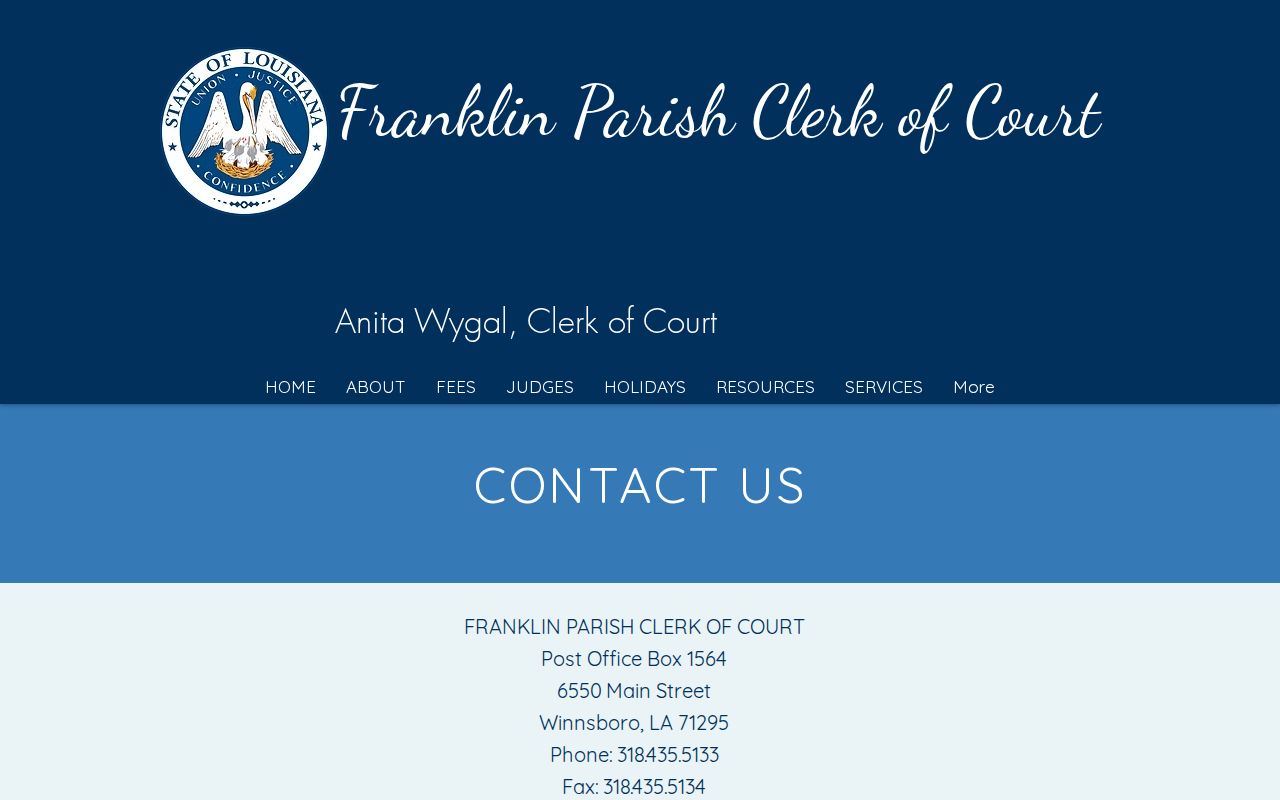
That contact route covers county-level records. It works for a Wisner case filed in Fifth Judicial District Court. It does not establish who holds a municipal or Justice of the Peace docket.
Note: A Wisner mail request should state the venue before it asks for a copy, because the Franklin Clerk does not replace every lower-court custodian.
Wisner Population and Court Scale
The 2020 Census place table records 771 residents for Wisner. The parish profile calls it a town and lists it second among four incorporated places. The town publishes no caseload count. Population is context for a local access page. It is never a count of dockets, citations, filings, or court sessions.
Franklin Parish covers 624.30 square miles. It held 19,774 people in 2020, per the cited parish facts. A small town inside that spread can have records split by venue. A Wisner ordinance file may stay local. A J.P. file follows a district. A Fifth Judicial District file lives in the parish court infrastructure at Winnsboro. Town size never answers the custody question.
So use the town name only as a location clue. Let the court name, case type, and document lead you to the right office. Never infer a Wisner filing total from Winnsboro or parish-level statistics.
Wisner Charge-Code Docket Limits
Louisiana's official Costs and Fees and Charge Code System helps explain an offense, statute, ordinance, or cost code. That is all it does. It is not a Wisner case search. It will not show whether a ticket is pending, paid, dismissed, continued, or set for court. A charge code is not a case number, docket event, or final outcome.
Keep each tool on its own job. Use the charge-code lookup only for its narrow question. Use the citation for the venue, court date, and payment or appearance instruction. Go to the named municipal, J.P., DA, or Franklin Parish office for the actual case record. If the citation offers a Fifth District traffic transaction, check the fields and terms on that screen yourself. Do not trust a charge-code result as proof of eligibility.
The split matters here because Wisner offers no city-level portal. An offense lookup may load while a case lookup cannot. The right next step is a call to the venue. That call beats a conclusion that the case does not exist.
Wisner Franklin Clerk Court Route
For Wisner cases in the Fifth Judicial District Court, one office holds the record. The Franklin Parish Clerk of Court keeps it. Civil, criminal, juvenile, family, adoption, appeal, minute, and proceeding files all live there. Every file type on that list for the parish sits in that one office. The clerk is the wrong stop for some matters. Those include a Wisner municipal, mayor's court, or Justice of the Peace case. Read the name on the filing or order. That tells you which office owns the file.
The official Meet the Clerk page names the public official who runs the office. Send a Wisner request down this route with enough to work with. Helpful details include the case or CMIS number, the caption, filing year, division, and judge. Add the rough setting date too. Name the document you want. A request with those pieces gets a faster lookup.
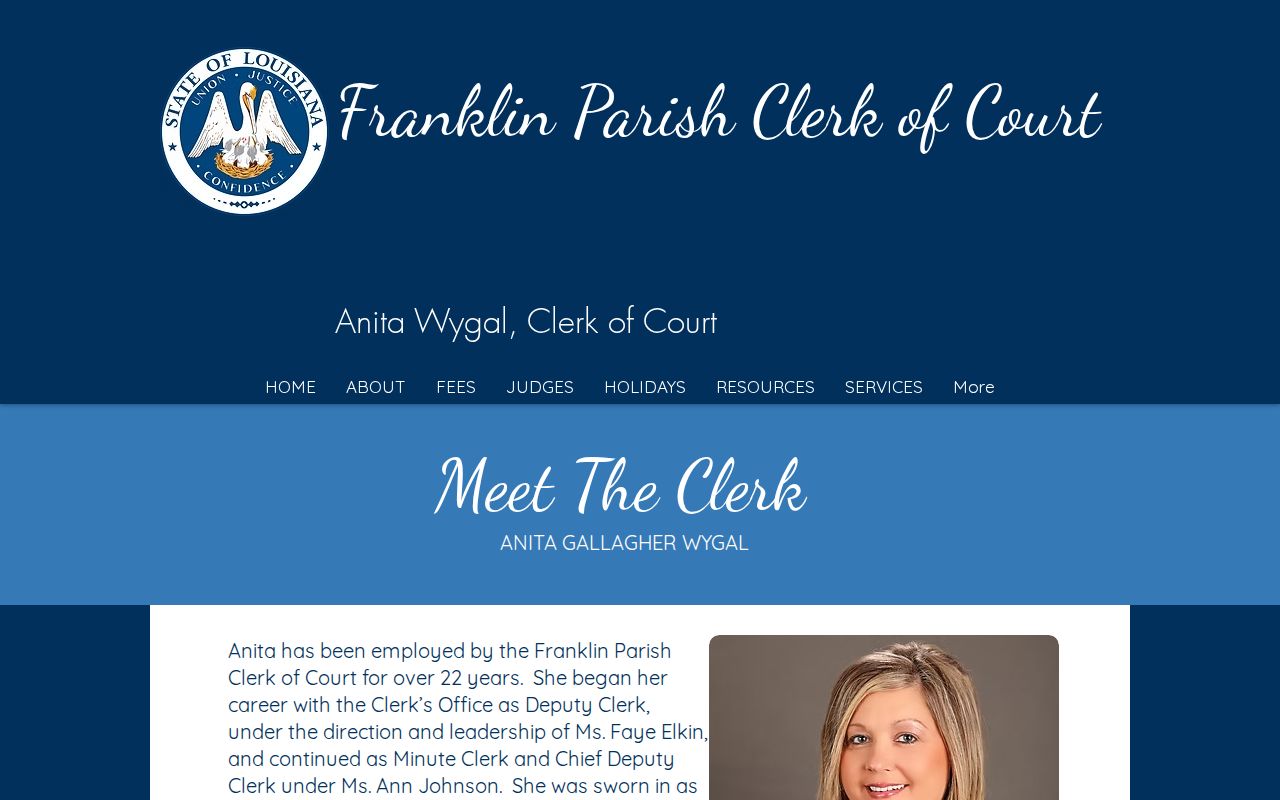
The page confirms who runs the parish records office. It offers no Wisner online search form. Also, do not use it to pull a town ordinance file away from the local custodian who keeps it.
Wisner Venue Confirmation
Check four things on the paper before you ask for a Wisner docket. Look at the court name first. Then check the law or ordinance cited, the case or citation number, and the next date. Those fields usually sort the matter fast. They reveal the venue. The matter may belong to the municipal court, a Justice of the Peace, or the Fifth Judicial District. It could also be a traffic transaction routed through another official channel. A Wisner docket search goes smoother once the venue is clear.
- Town ordinance: ask the Wisner municipal or mayor's court custodian if the court is operating.
- Limited civil, eviction, or peace-bond matter: use the Franklin Parish J.P. district and jurisdiction shown by the official directory.
- Major civil, felony, family, juvenile, adoption, succession, or appeal matter: contact the Franklin Parish Clerk for the Fifth Judicial District file.
- Traffic diversion or payment: follow the court or DA instruction printed on the citation and confirm the program terms.
Still unsure about venue? Call the issuing office. Ask who holds the docket, where the current setting is recorded, and whether the item is public, restricted, or certified. A Wisner address by itself will not pick the custodian for you.